Tesla Full Self-Driving (FSD) with the AI6 chip represents the forefront of autonomous driving and smart electric mobility. This system combines advanced neural networks, sensors, and real-time processing to make safe and precise driving decisions, bringing fully autonomous vehicles closer to reality.
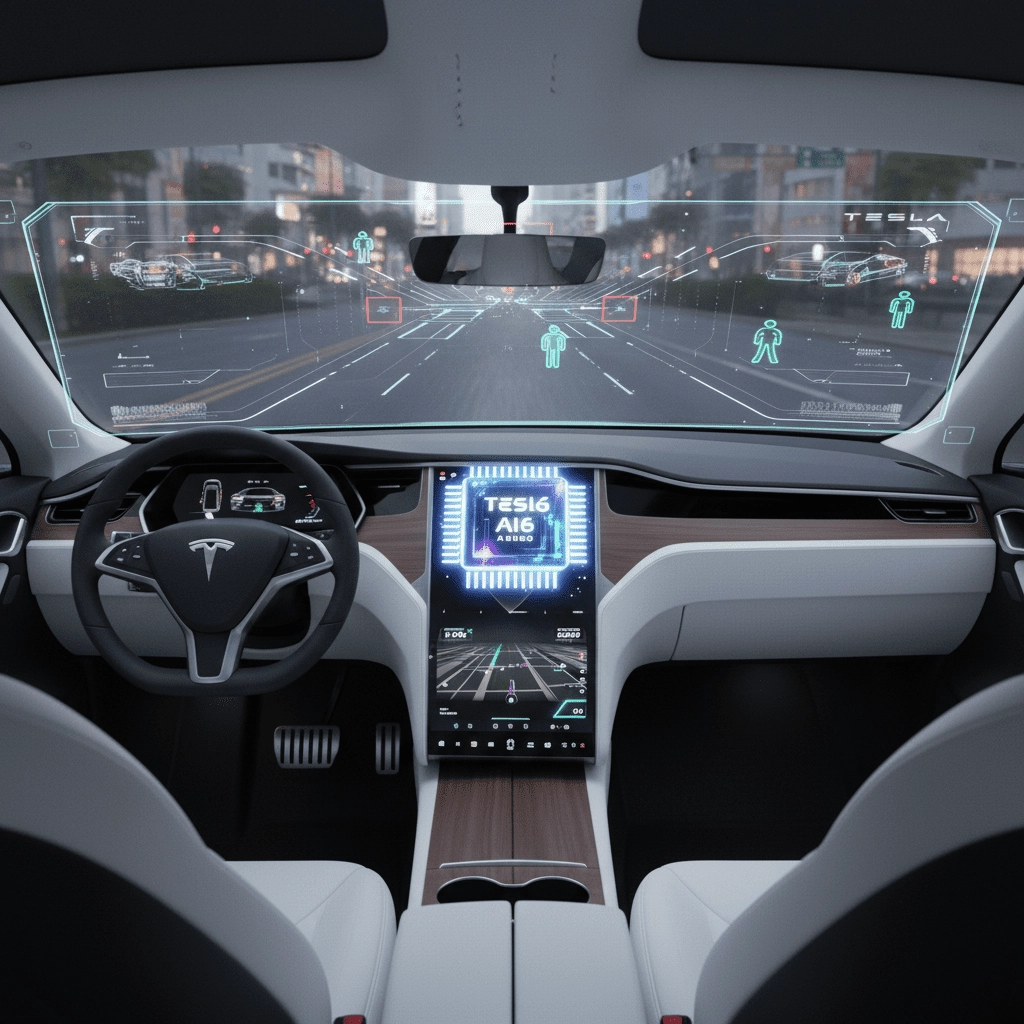
The latest FSD V14 version, together with the AI6 chip, enhances predictive capabilities, environmental perception, and energy efficiency, providing safer, more comfortable driving experiences while continuously learning from Tesla’s global fleet.
Tesla FSD and AI6 Chip: Functionality and Features
The FSD system processes data from cameras, radars, and maps using deep neural networks. Key capabilities include:
- Hands-free driving on highways and controlled urban environments.
- Obstacle detection and avoidance in real time.
- Machine learning from Tesla’s global fleet.
- OTA updates that expand and improve functionality without a visit to the service center.
- Energy optimization thanks to the AI6 chip performing billions of operations per second with superior efficiency.
Tesla introduced unsupervised FSD robotaxis in Austin, Texas, marking the beginning of large-scale urban autonomous mobility.
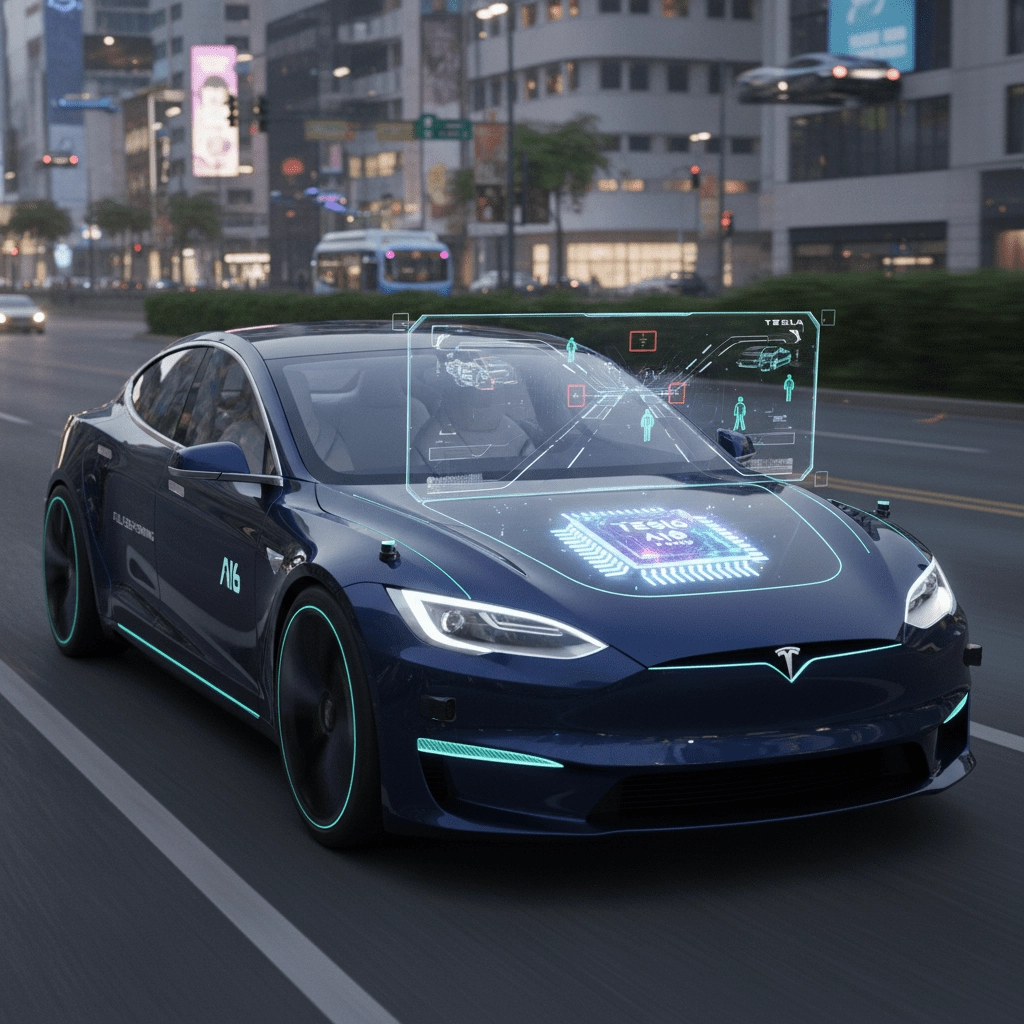
Autonomous System Comparison
| System | SAE Level | Key Sensors | Main Advantages | Limitations |
|---|---|---|---|---|
| Tesla FSD | 2 | Cameras + AI6 | Global learning, OTA updates, energy efficiency | Human supervision required |
| Waymo | 4 | LIDAR + cameras + radar | True level 4, advanced safety in limited areas | Geographical dependency, high costs |
| Cruise (GM) | 4 | LIDAR + radar + cameras | Safe urban autonomous mobility | Regulatory and geographic limitations |
Tesla avoids LIDAR to reduce costs and complexity, relying on cameras and advanced AI processing, sparking debates about safety under adverse weather or complex urban conditions.
Environmental Impact of Tesla FSD
Tesla’s electric autonomous mobility approach contributes significantly to sustainability:
- Energy consumption reduction: Optimizes acceleration, braking, and routes, maximizing battery range.
- Lower carbon emissions: 100% electric propulsion combined with efficient driving reduces pollution and urban noise.
- Traffic optimization: Anticipating movements and coordinating autonomous vehicles decreases congestion and travel time.
- Robotaxi fleet efficiency: Autonomous taxi services could reduce the number of cars on the road and optimize urban transport.
Overall, Tesla FSD with AI6 chip represents technological innovation and a step towards safer, more efficient, and sustainable mobility, while regulatory challenges remain for achieving SAE Level 5 fully autonomous driving without human supervision.
Practical Applications for Users
- Hands-free highway driving: Allows drivers to relax while the system maintains speed and trajectory.
- Urban autonomous driving: Detects pedestrians, cyclists, and traffic signals for safe maneuvers.
- Traffic management and optimal routes: Reduces congestion and energy consumption.
- Continuous OTA updates: New features and safety improvements without service visits.