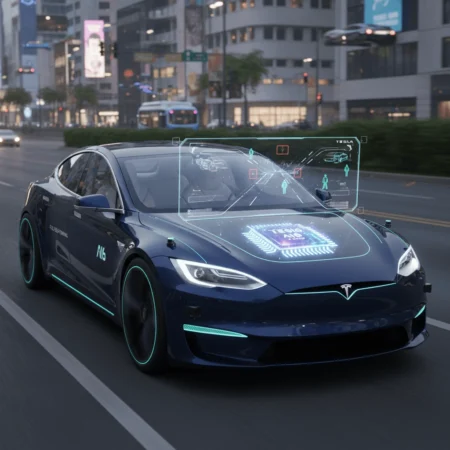
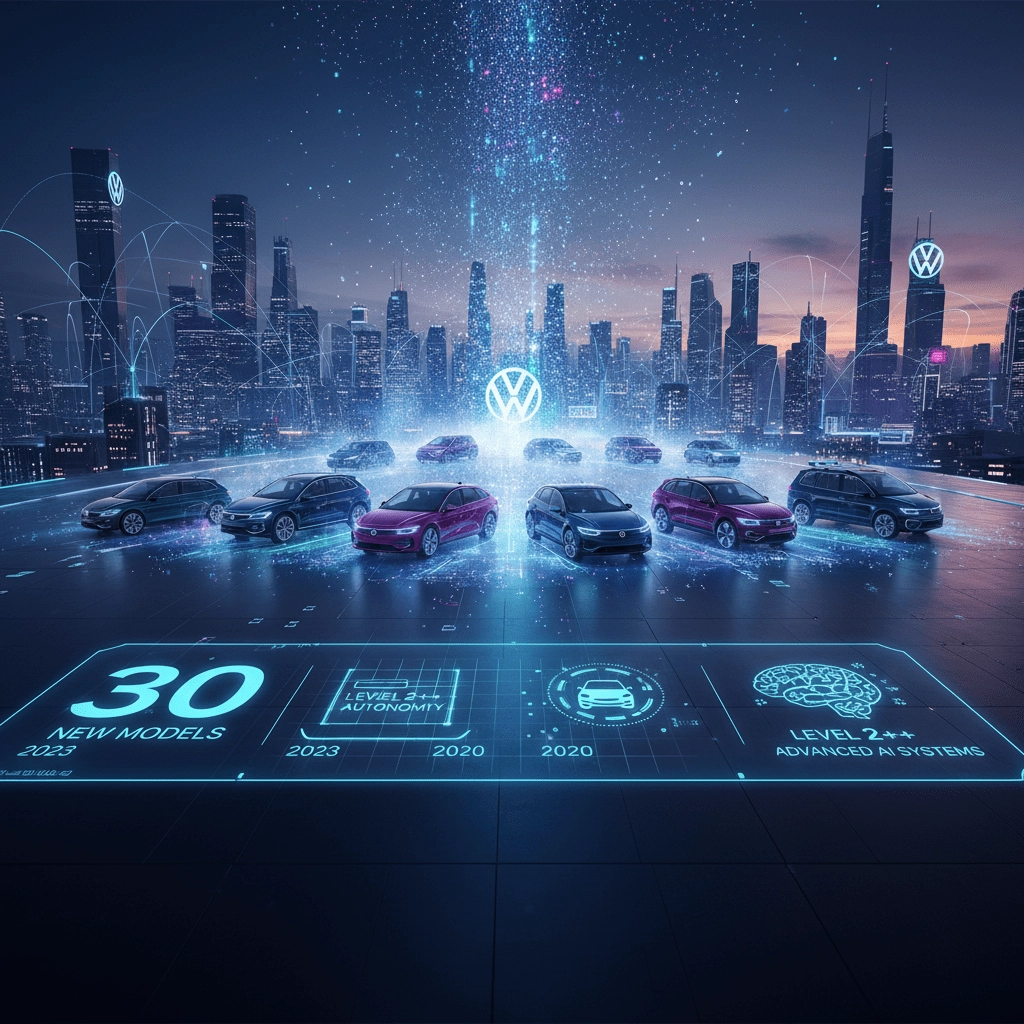
Volkswagen Group is undergoing a decisive technological transformation with the NEW AUTO strategy, aimed at developing 30 autonomous models by 2030, featuring advanced artificial intelligence (AI) and autonomy levels from 2++ to 4. This initiative positions the company to lead in smart, safe, and sustainable mobility, combining technological innovation with large-scale electrification.
The group focuses on a modular SSP platform, AI integration in the intelligent cockpit, and fleets of autonomous vehicles and shuttles in collaboration with ARGO AI, enhancing energy efficiency, safety, and user experience.
Key Volkswagen Technologies for 2030
- SSP (Scalable Systems Platform)
- Modular platform for all future electric vehicles.
- Supports 800V systems for fast charging and optimized energy efficiency.
- Scalable for models from compact cars to premium SUVs.
- Autonomous driving systems level 2++ and 3/4
- Integration with ARGO AI for advanced automated driving.
- Vehicles capable of handling complex scenarios without human intervention (level 4) in pilot fleets.
- Autonomous shuttles and buses in cities like Munich.
- Intelligent Cockpit with AI
- Smart interfaces personalize driving experience.
- Enhances safety, connectivity, and driver assistance through AI.
- Battery megafactories and cell production
- In-house battery cell production with Gotion High-Tech and Northvolt.
- Ensures mass electrification with lower environmental impact and optimized costs.
Comparison with Leading Manufacturers
| Feature | Volkswagen Group | Tesla | Waymo | GM Cruise |
|---|---|---|---|---|
| Expected autonomy level | 2++ to 4 (vehicles & shuttles) | 2 to 3 (FSD with AI6 chip) | Level 4 (limited robotaxis) | Level 4 (urban mobility) |
| Main technology | SSP Platform and ARGO AI | Neural networks, cameras | LIDAR, radar, 3D maps | LIDAR, radar, cameras |
| Mobility-as-a-Service (MaaS) | Planned shuttles and robotaxis | FSD robotaxis Austin | Commercial robotaxi services | Commercial robotaxi services |
| Battery production | In-house unit cells, gigafactories | External dependency | N/A | N/A |
| Market focus | Full electrification and autonomous fleets | EVs with OTA software | Urban autonomous mobility | Urban autonomous mobility |
Volkswagen combines mass electrification, proprietary software, and strategic partnerships to accelerate safe and scalable autonomous vehicles, harmonizing technological innovation, sustainability, and global economics.
Expected Impact and 2030 Vision
- Safe and efficient mobility: Accident reduction through advanced autonomous systems.
- Full electrification: Every future model will have an electric version, reducing global emissions.
- MaaS services: Integration of shuttles, robotaxis, and urban/regional autonomous fleets.
- Technological innovation: Automated driving, advanced AI in cockpits, and optimized modular platforms.
- Sustainability and circular economy: In-house battery production, reduced supplier dependency, and energy optimization.
With this strategy, Volkswagen Group positions itself as a leader in the next automotive generation, defining a future where autonomous driving, AI, and electric mobility transform personal and business transportation.